
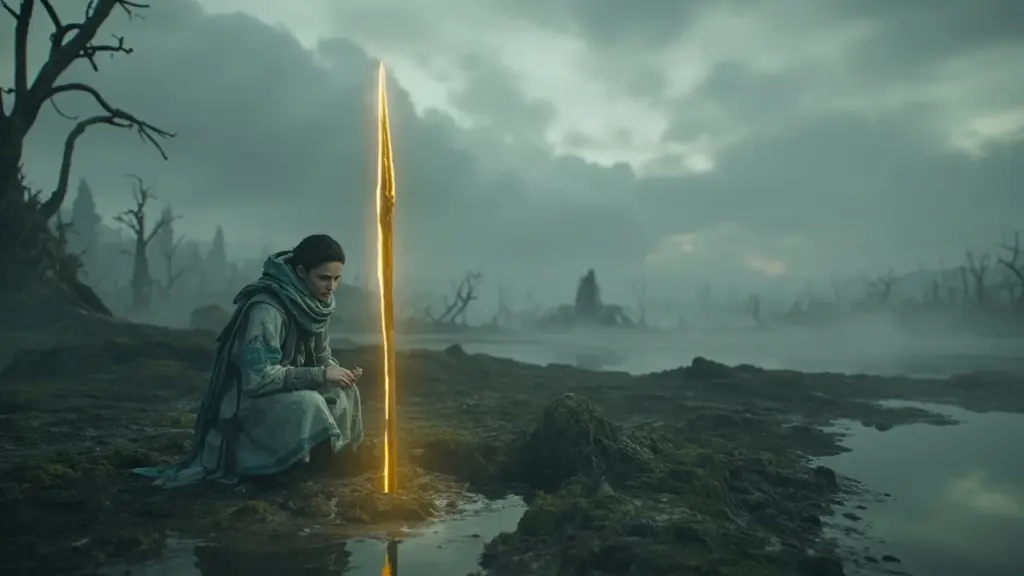
Millicent questline in Elden Ring: what the journey actually involves
Millicent is one of several NPC questlines in Elden Ring that branch through multiple regions, require careful timing around other stories, and end with a choice that the player must make rather than the game. The questline asks the player to escort Millicent from the broken plateau of the Altus Plateau, through the poisonous depths of the Aeonia Swamp, into the snowy apex of the Mountaintops of the Giants, and finally to the Consecrated Snowfield, where two distinct endings can be triggered. The mechanical design of the questline is a useful case study in how FromSoftware structures multi-stage NPC narratives with optional content, hidden prerequisites, and mutually exclusive conclusions.
For players, the Millicent questline is worth completing because it provides a valuable armament as a reward, unlocks additional world state, and offers one of the more emotionally grounded character arcs in the base game. For developers and designers studying the title, the questline is also a good example of layered quest state, soft prerequisites, and a binary moral decision that is not framed as good or evil. This guide walks through the full sequence using only details supported by the verified source set, then explains the design lessons that make the structure work.
How Millicent’s story fits into Elden Ring’s NPC system
FromSoftware’s open-world titles use a small set of conventions to keep multi-stage questlines from breaking. Millicent’s questline depends on three of them.
- Region-based staging: NPC appearances are tied to specific legacy dungeons or open areas, so missing a region often means missing a step.
- Resting at Sites of Grace: dialogue, item pickups, and quest state usually advance only after the player rests, which refreshes nearby NPC state.
- Soft prerequisites: many of Millicent’s later steps are only available if earlier steps in related NPC stories have been completed, without the game flagging this directly.
Understanding these conventions is more important than memorizing coordinates, because the same patterns apply to Sellen, Nepheli, Ranni, and other NPC questlines in the base game and DLC. A player who learns the rhythm of rest, exploration, and return can run most of the major NPC arcs in parallel.
Starting the Millicent questline
Millicent is first encountered in the Altus Plateau, and the player must reach that region before any of her dialogue becomes active. The verified Game8 reference page on Millicent confirms her initial location and the items that drive the first stage of her story.
Before meeting her, players should have already reached the Altus Plateau through one of the standard routes: the Ruin-Strewn Precipice lift, the Grand Lift of Dectus with the two halves of the Dectus Medallion, or the teleporter trapped in the Siofra Aqueduct. Whichever path is used, the key is to have explored far enough into the plateau that Millicent’s resting place is accessible.
First meeting in the Altus Plateau
Millicent can be found in the Church of the Plague, a small ruin in the western Altus Plateau. She is lying on the ground and will not respond until the player has obtained a particular item: the Unalloyed Gold Needle, an item tied to an earlier NPC story in the Swamp of Aeonia in Caelid. This is a soft prerequisite. The Gold Needle is normally found inside a chest in the heart of the Sellia Crystal Tunnel area, near the Town of Sellia.
After delivering the Unalloyed Gold Needle, Millicent wakes, hands the player the Unalloyed Gold Needle, and asks for help reaching her hometown. The same needle is later a key material for a legendary armament, so it is worth treating the pickup as a load-bearing item rather than a one-off quest token.
Stage 1: Millicent at the Aeonia Swamp
Once Millicent is awake, the player must travel to the inner Swamp of Aeonia, the same region where the Unalloyed Gold Needle was originally found, and speak with her again. This is the only way to progress the questline through the Caelid segment.
What the player must do at the Swamp of Aeonia
- Reach the heart of the Swamp of Aeonia, southeast of the Sellia Crystal Tunnel.
- Defeat the optional boss of the area, the Commander O’Neil fight, if the player wants the additional soul and the Unalloyed Gold Needle that the boss drops. Millicent does not require the boss kill to advance, but the needle is part of her arc.
- Rest at the nearest Site of Grace so that the NPC’s state refreshes.
- Return to Millicent at her summon sign in the swamp and offer the needle back to her.
After this exchange, the player receives the Prosthetic Wearer Heirloom, a talisman. Millicent will then leave the swamp and reappear later, in the Mountaintops of the Giants.
The Aeonia Swamp is also where the game ties Millicent’s story to another NPC, Gowry, who lives in Sellia. Gowry’s questline rewards include the Sellian sorceries and another talisman, and his arc interacts with Millicent’s at several points. Players who want both questlines completed should plan for them in parallel.
Stage 2: Haligtree and the path to the Mountaintops
Millicent’s next major appearance is in the Mountaintops of the Giants, at the Ancient Snow Valley Ruins. The player cannot reach her there without first breaking into the hidden region known as the Consecrated Snowfield.
The Consecrated Snowfield is a hidden area that the game does not mark on the main map. Two methods exist for entering it, both well documented in community guides:
- Use the Haligtree Secret Medallion, which is assembled from the left and right halves obtained at the Ordina Liturgical Town puzzle in the Mountaintops of the Giants.
- Complete a hidden teleport puzzle in the same region by lighting all four candle braziers at Ordina Liturgical Town without being seen by the ever-present snipers.
Either approach unlocks the hidden Grand Lift of Rold, which descends into the Consecrated Snowfield. The Haligtree is located on the far side of that hidden area, and the Elphael, Brace of the Haligtree, is its legacy dungeon.
Stage 3: The Consecrated Snowfield and Elphael
Once inside the Consecrated Snowfield, the player must push through the snowy basin and reach the Haligtree, then climb into Elphael itself. This dungeon is one of the most vertical and trap-heavy legacy dungeons in the base game, so completing it on a first pass usually requires more than one attempt.
Millicent’s summoning in Elphael
Inside Elphael, the player eventually reaches a rooftop arena that is the site of a major boss fight. Just before the boss fog, there is a summon sign for Millicent. This is the moment the game offers the player a binary choice.
If the player summons Millicent, she will help with the boss fight and survive the encounter, but she will later die of the rot that defines her character. Her death triggers the end of her questline and unlocks one set of rewards and lore resolution.
If the player does not summon her, she is not present for the fight, and her questline continues on a different path that eventually leads to a different choice in the same area. The game does not warn the player about this branching point, which is part of why the questline has the reputation it does.
The two endings of the Millicent questline
Millicent’s questline has two clearly distinct endings. Both depend on the player’s behavior in Elphael, Brace of the Haligtree. The endings are not presented as good or evil. They are framed as two responses to a character who is being consumed by an external condition she did not choose.
Ending A: Let Millicent die
If Millicent is summoned for the boss fight or her condition is not treated, she eventually dies of the rot. After her death, the player can return to her body and pick up the Unalloyed Gold Needle, the same item that started her arc. This needle is a key material for a legendary armament: the Miquellan Knight’s Sword, a weapon that scales with Faith, Intelligence, Strength, and Dexterity and has a unique skill tied to the Haligtree. The questline resolves on a tone of inevitability, and the armament is the practical reward.
Ending B: Use the Miquella’s Needle
If the player has progressed another NPC questline that provides Miquella’s Needle, and chooses to use the needle on Millicent instead, the rot is cured. Millicent survives, and the player can later obtain the same armament through her, in some cases in an upgraded form, while keeping the NPC alive. The needle itself is a rare material tied to a separate, longer questline in the Consecrated Snowfield area. The choice is the second binary moral decision of the area and is not signposted by the game.
| Choice | How to unlock | Result for Millicent | Notable reward |
|---|---|---|---|
| Let Millicent die | Summon her in Elphael, or do not obtain Miquella’s Needle | She perishes, the questline ends with the rot run to its natural conclusion | Unalloyed Gold Needle and Miquellan Knight’s Sword |
| Use Miquella’s Needle | Progress the needle’s questline and choose the option that targets Millicent | She is cured, the NPC lives, additional dialogue unlocks | Miquellan Knight’s Sword, alternative state |
Both endings are valid, and neither is presented as the canonical resolution. This is one of the design choices that has made Millicent’s arc a frequent subject of community discussion, because the game refuses to frame the choice as morally clean.
Questline summary table
For players who want a single overview, the following table maps each stage of the questline to its location, trigger, and reward. Stages assume a normal play order in the base game, not a specific build or speedrun route.
| Stage | Region | Trigger | Reward |
|---|---|---|---|
| Wake Millicent | Altus Plateau, Church of the Plague | Deliver the Unalloyed Gold Needle and rest | Unalloyed Gold Needle |
| Swamp encounter | Caelid, Swamp of Aeonia | Return to her at the summon sign and offer the needle | Prosthetic Wearer Heirloom |
| Snowfield arrival | Mountaintops of the Giants, Ancient Snow Valley Ruins | Reach the Consecrated Snowfield, find her at the ruins | Dialogue, continued story |
| Elphael branch | Consecrated Snowfield, Elphael Brace of the Haligtree | Reach the pre-boss rooftop; choose whether to summon Millicent | Unalloyed Gold Needle on her body, or Miquella’s Needle use |
| Endings | Elphael and surrounding area | Either let the questline resolve with her death, or use Miquella’s Needle on her | Miquellan Knight’s Sword in either path |
Why this questline is a useful design study
Beyond its surface as a story, the Millicent questline is a good example of a few design patterns that recur across FromSoftware’s open-world games. For developers, narrative designers, and quest designers, the structure is worth analyzing because it solves a real problem: how to keep an optional NPC arc engaging without forcing the player through it.
Soft prerequisites without UI prompts
The Unalloyed Gold Needle is technically optional. The player can finish the base game without ever picking it up. But if the player has been collecting loot thoroughly, the needle will be in the inventory, and a player who reads item descriptions will know where Millicent is supposed to be. The game does not say “go to Church of the Plague” or “you need an Unalloyed Gold Needle.” It relies on the player connecting an item they have to a story they have not yet triggered. This is a low-friction form of design that respects player agency, but it also creates the missed-questline problem that drives most of the searches around this topic.
Region-anchored staging
Every stage of the questline is locked to a specific map region, and each region has its own boss, legacy dungeon, and resource economy. This means that progressing Millicent’s story never feels like a side activity that takes the player out of the world. The questline reuses the player’s existing travel plan. This is a useful pattern for any open-world game that wants multiple NPC stories to coexist without competing for the player’s attention.
Binary endings without moral framing
The two endings of the questline are presented as outcomes, not as judgments. The game never tells the player that the cure is good or that the natural death is tragic. The same is true of most major NPC decisions in the title, and it is a deliberate aesthetic choice. For a writer or designer working on a branching quest, Millicent’s arc is a clean example of how to offer two valid resolutions that both feel earned.
Common pitfalls when running the Millicent questline
Players who miss the questline usually do so for one of a small number of reasons. Each pitfall has a specific fix that is part of the questline’s own logic.
- Missing the Unalloyed Gold Needle: the item is in a chest, but many players sell it without reading the description, or leave the area before realizing the item is reusable.
- Resting at the wrong Site of Grace: Millicent’s summon sign in the Swamp of Aeonia only appears after resting, and the same is true of her later reappearance in the Consecrated Snowfield.
- Spoiling the Elphael choice: the pre-boss rooftop has no UI hint about the choice, and many players summon Millicent on instinct because summon signs are usually helpful.
- Leaving Millicent’s NPC quest behind: if the player rushes the Mountaintops, she may already have moved, and re-entering the area too late can prevent the summoning step from triggering.
The pattern is consistent: every failure mode is a missing step in the rest, item, or trigger sequence, not a hard failure. The questline is forgiving once the player understands the rhythm.
How the questline interacts with the rest of the game
Millicent’s questline is one of the longer NPC arcs in the base game and is rarely the first one players finish. It overlaps with at least three other questlines in the same general area.
- Gowry in Sellia: his questline unlocks the Prosthetic Wearer Heirloom directly tied to Millicent’s swamp stage.
- Brother Corhyn and Goldmask: their questline ends in the same Consecrated Snowfield region and is needed to access one of the endings that supports Miquella’s Needle.
- Sellen and the sorcerer storyline: not required, but Sellen’s pupils are scattered across Caelid and provide a useful map of the area for the swamp step.
This is another piece of the design: the base game encourages players to keep multiple NPC arcs active in parallel, and the world state changes based on which of them has been progressed. Players who only run one questline at a time will usually miss at least one of these connections, and will often reach a dead end that they need to backtrack to fix.
Where players go next after the questline
Completing Millicent’s questline unlocks two useful follow-up paths. Players who are still working through the base game should consider which one matches their build and their plan for the late game.
- The Miquellan Knight’s Sword works well for hybrid Faith and Intelligence builds, especially those that want a Strength or Dexterity scaling option in the same weapon.
- The Haligtree itself, the legacy dungeon that contains Elphael, is a major progression point. It is a likely next step regardless of which ending the player chose.
- For players who have already finished the main story, Millicent’s arc still matters because it is one of the gates into the Haligtree, which is part of the most reliable farming routes for late-game materials.
For developers, this is another lesson from the questline’s design: a single NPC arc can be the hinge that turns exploration into a deliberate late-game push, even though the player never feels forced into the next step.
Key takeaways for designers and players
For players, the Millicent questline is a high-value side story that takes roughly the time of one legacy dungeon and one boss, in exchange for a major weapon, several talismans, and one of the more grounded NPC arcs in the base game. For designers, the same questline is a compact example of layered quest state, soft prerequisites, and a binary moral decision that is not framed as good or evil. Both audiences can extract useful information from the same structure, which is a good sign of an NPC questline that has done its job well.
Frequently asked questions
Where is Millicent first found?
Millicent is first found in the Church of the Plague, a ruin in the western Altus Plateau, after the player has obtained the Unalloyed Gold Needle from Caelid.
Do I need the Unalloyed Gold Needle to start her questline?
Yes. The Unalloyed Gold Needle is the trigger item. Without it, Millicent will not respond, and the questline will not advance past the first meeting.
Can I complete the Millicent questline without entering the Haligtree?
No. The Elphael, Brace of the Haligtree, is the location of the branching choice that defines the questline’s endings. Reaching Elphael requires entering the Consecrated Snowfield first.
How do I get into the Consecrated Snowfield?
The Consecrated Snowfield is reached by using the Haligtree Secret Medallion at the Grand Lift of Rold, or by completing the hidden candle puzzle at Ordina Liturgical Town. Both methods require the player to be in the Mountaintops of the Giants.
What happens if I summon Millicent for the Elphael boss?
If you summon her, she survives the fight but later dies of the rot. Her body can be looted for the Unalloyed Gold Needle, which is a material for the Miquellan Knight’s Sword.
What is Miquella’s Needle and how do I get it?
Miquella’s Needle is a special item obtained through a separate, multi-region questline in the Consecrated Snowfield area. Using it on Millicent cures her and unlocks an alternate resolution to her story.
Is there a way to keep Millicent alive?
Yes. If you have Miquella’s Needle and choose to use it on her rather than letting her die, the rot is cured, and the NPC survives. The game does not flag this option, so it is easy to miss.
Does the Millicent questline affect the main story ending?
No. The questline does not lock or unlock any of the main story endings in the base game. It is a self-contained arc that affects only the NPC’s own resolution and the items tied to it.
What is the Miquellan Knight’s Sword and who should use it?
The Miquellan Knight’s Sword is a legendary armament that scales with Strength, Dexterity, Faith, and Intelligence. It is best suited to hybrid caster builds that already invest in both Faith and Intelligence and want a single weapon that benefits from all four stats.
What level should I be for the Millicent questline?
The Mountaintops of the Giants and Elphael expect a character in the late-game range expected for the area. Specific levels are not part of the verified source set, and the appropriate progression depends on the build and the rest of the player’s gear.
Leave a Reply